CDN
IXP
STREAMING
Millions of French people watched the World Cup semi-finals and final: no one thought about the infrastructure behind it

Millions of French people watched the World Cup semi-finals and final. No one thought about the infrastructure behind it.
Behind every match watched via streaming, there’s a network infrastructure absorbing millions of simultaneous connections without anyone noticing.
That’s the definition of infrastructure that works well.
When you launch myCANAL or any other streaming service on your phone or Smart TV, the video stream doesn’t come directly from Canal+’s servers. It’s distributed by CDNs (content delivery networks) that temporarily store the stream as close as possible to users to deliver it as fast as possible.
These CDNs are connected to France-IX. Internet service providers (from the biggest to the most regional) pick up this stream directly at our switches, without the data having to pass through servers abroad.
Result: less latency, less congestion, less risk of a dropout right at the moment of a goal.
That’s exactly the role of an IXP: a giant power strip where ISPs, broadcasters, and web giants interconnect locally.
When millions of French people watch the same match at the same time, the traffic stays in France, exchanged directly between the players present on our infrastructure.
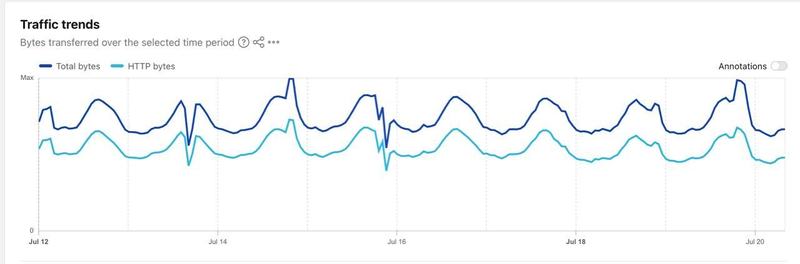
During major matches, France-IX records traffic peaks in the evening. Traffic peaks during major events are predictable. What’s less predictable, however, is the ability to absorb them without the end user noticing.
France-IX is that capacity, available to every player connected to it.
Note: Based on Cloudflare data, you can see a traffic spike during World Cup match hours (this is in UTC, so 2 hours earlier than in France, the timing lines up correctly).
This news was first published on LinkedIn. To comment or share it, head to the original post. → See the post