INFRALLIANCE
SOVEREIGNTY
SUBSEA CABLES
Subsea cables: 70% reportedly owned by the tech giants

70% of subsea cable infrastructure is reportedly owned by the tech giants. That is the reality operators are facing.
And it is a relatively recent phenomenon: in the past, consortia of operators owned such cables. But things have changed over the last few years and the model has been reversed: operators have become the customers, or at least such subsea cable projects can no longer go ahead without a strong contribution from the tech giants.
For example, in France, in the Bay of Biscay area, the landing point of two subsea cables built in recent years to interconnect North America and Europe, these projects were launched by Facebook/Meta (the Amitié cable) and Google (the Dunant cable).
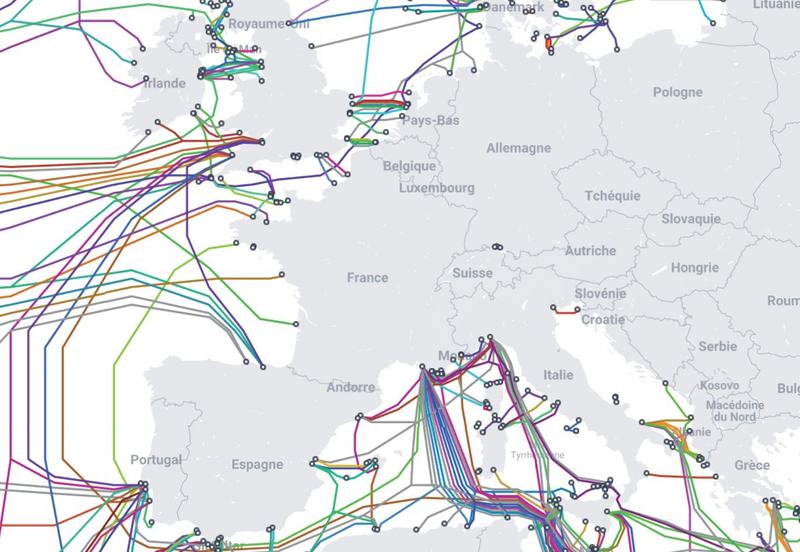
The excerpt below from submarinecablemap.com (a map kept up to date by TeleGeography) shows the subsea cables linking France to the rest of the world. And by taking the time to read the details of each cable, this predominance becomes obvious.
So what is the issue behind this change? Data sovereignty.
And that is what is really at stake in the question of digital sovereignty.
That is why, at France-IX, and with the Think & Do Tank Infralliance, we are committed to developing sovereign infrastructure, and we make sure this is the case within the scope we control.
Illustration: excerpt from the submarinecablemap.com map, TeleGeography.
This news was first published on LinkedIn. To comment or share it, head to the original post. → See the post