GEOPOLITICS
RESILIENCE
SUBMARINE CABLES
Strait of Hormuz: four submarine cables grouped in Omani waters, and a single repair ship inside the Gulf
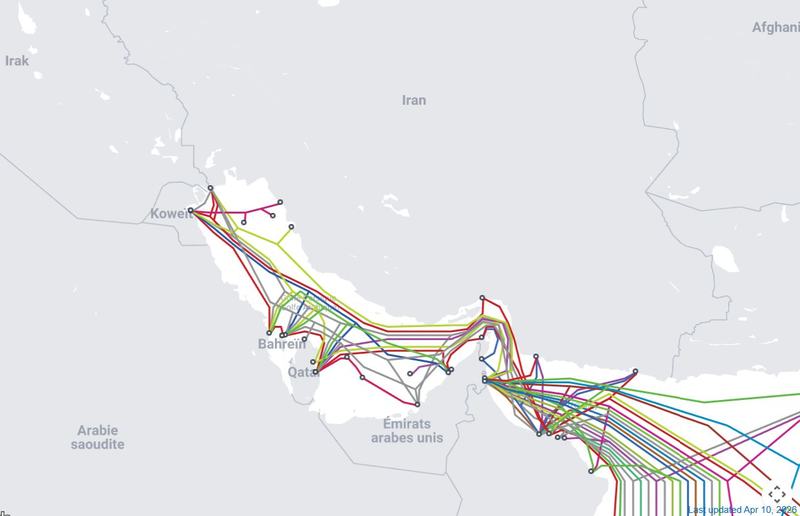

During the Strait of Hormuz crisis, Iran explicitly threatened three types of infrastructure: desalination plants, power grids, and submarine cables. The Internet is now a target of war.
The Strait of Hormuz is known for oil and gas. Less well known: it is also the route for the data of part of the Middle East and South Asia.
Four submarine cables cross the strait. They carry a significant share of the region’s Internet traffic. And these four cables have one thing in common: they are all grouped together in Omani waters.
This is not a technical choice but a geopolitical necessity: since relations with Iran make any passage through its territorial waters impossible, all the cables have been concentrated on the same side of the strait. A diplomatic constraint that creates a structural vulnerability: if something happens in that precise area, there is no alternative.
The Gulf countries have back-up plans, but they are safety nets, not substitutes.
Bahrain, Kuwait and Qatar have land connections to Saudi Arabia. The Emirates have the advantage of having their main cables land in Fujairah, on the Indian Ocean side. Saudi Arabia relies mostly on its Red Sea cables. These alternatives exist, but they are not sized to absorb a total rerouting.
Because the real risk is not the cut, it is the inability to repair.
Submarine cables break regularly: around 200 incidents a year, mainly caused by anchors and fishing nets.
That is manageable in normal times, thanks to specialised ships. But repairing in an active conflict zone is another story: ships have to obtain authorisations, stay stationary during the work…
In the Gulf, only one repair ship is currently stationed inside. If the strait becomes inaccessible, it is on its own.
The Red Sea has already shown this in practice: two major incidents in two years, months of repairs each time, and several major new cable projects still blocked (2Africa, SeaMeWe-6, among others). The fourth cable damaged in September 2025 is still out of service.
Our vulnerabilities do not depend on technology. They depend on the good manners of leaders who are not much given to good manners.
Do you know how many risk zones your data passes through before reaching its destination? France-IX cannot change geography, but it can help you depend on it as little as possible.
This news was first published on LinkedIn. To comment or share it, head to the original post. → See the post