AI
DIGITAL SOVEREIGNTY
OPEN SOURCE
Making your AI open source is an ecosystem strategy: what China is doing while Europe watches
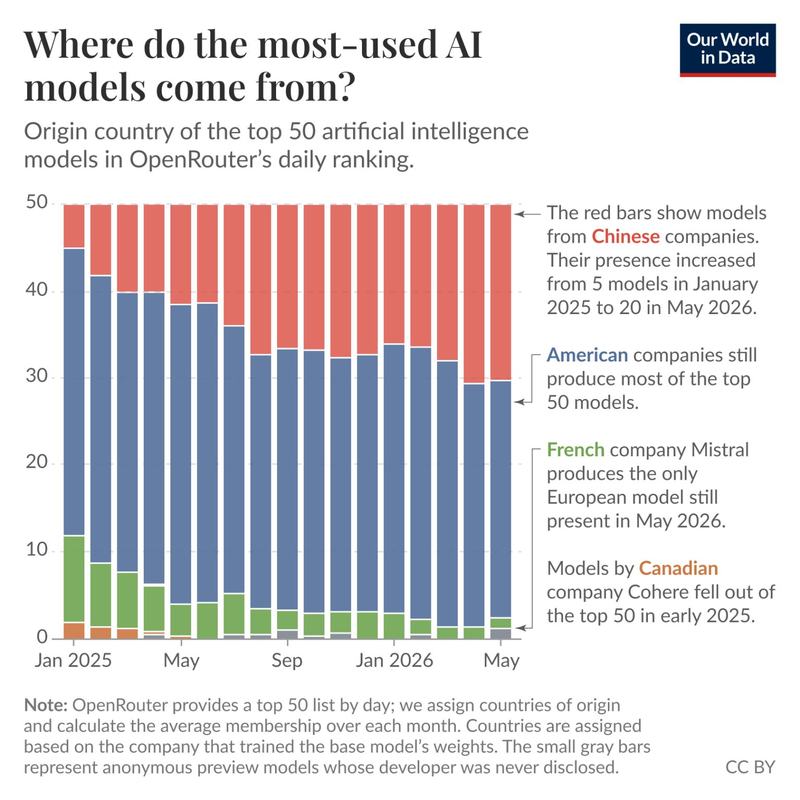

Making your AI open source is an ecosystem strategy. At least, that’s what China is doing while Europe watches.
In one week this summer, there were 14 Chinese announcements around open-source AI, compared to 4 American, 2 French, and one European.
With this strategy, they’re rallying a global community of developers to build on top of it. But also companies and teams who integrate it into their products and workflows.
And once the ecosystem is there, embedded in everyday use, people stop switching, because migration costs often become prohibitive.
That’s exactly what China is doing.
Some even argue that deploying an open-source Chinese model on European infrastructure can offer more operational sovereignty than a proprietary American service.
The argument holds up: the data stays local, the code can be inspected.
But it overlooks one thing, open source doesn’t mean absence of control: licenses, terms of use, geographic restrictions, compliance obligations… All of these are conditions that can affect access.
And above all, dependence on an ecosystem doesn’t need a backdoor to be real.
Europe is well aware of this, since dependence on American platforms and the US Cloud Act sent a wave of panic through its institutions.
Sovereign players do exist (Mistral in France, Aleph Alpha in Germany), along with infrastructure initiatives like OVHcloud or Scaleway.
The AI Act gives Europe a regulatory framework that neither China nor the United States has. Except that Chinese or American AI models are already an economic reality for many companies.
So how do we structure this usage so we don’t reproduce, for a third time, the same pattern of dependency?
Illustration: Our World in Data chart, “Where do the most-used AI models come from?” (CC BY), published with the post.
This news was first published on LinkedIn. To comment or share it, head to the original post. → See the post