EUROPE
DEPENDENCIES
DIGITAL SOVEREIGNTY
DGSI-Palantir contract: whole swathes of our digital sovereignty rest on players we do not control
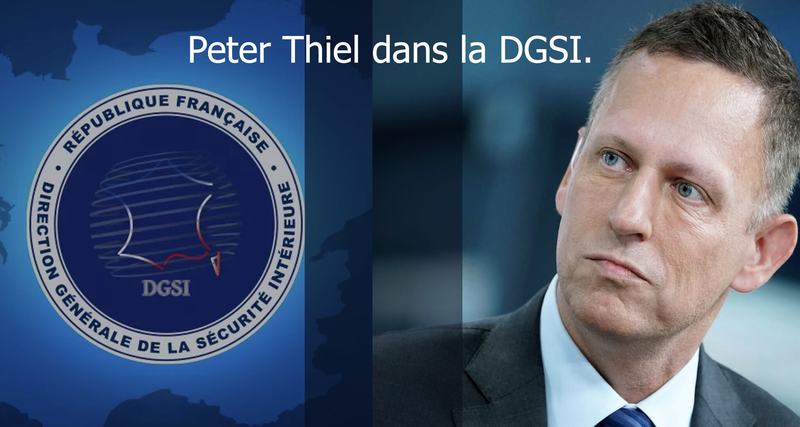

The renewal of the contract between the DGSI (France’s domestic intelligence agency) and Palantir reveals a fundamental problem: whole swathes of our digital and energy sovereignty rest on players whose decisions and allegiances we do not control.
Six months ago, hardly anyone was paying attention, but today the question can no longer be dodged.
Peter Thiel’s company, whose links with circles close to the Trump administration are no secret, had its contract with the DGSI renewed a few months ago.
A decision that shows the extent to which French state infrastructure relies on American players whose political allegiances and legal obligations are entirely beyond our control, and can sometimes run counter to our national interests.
Fortunately, awareness is growing faster, and we can see it in the decisions being taken:
These are weak signals which, taken together, point to something more structural: France is starting to map its dependencies and look for alternatives.
The geopolitical context has accelerated what has been under discussion for years, even if there are still real questions of consistency: renewing with Palantir on one hand, migrating to Linux on the other, cutting back incentives for renewable energy (electric car leasing, Prime Rénov’), then relaunching them…
France is sending contradictory signals because it is still making up its mind, stuck in the comfort of dependence but aware of the sovereignty issue. In short, we struggle to set our priorities… and stick to them. We struggle to consider any timeframe other than extreme short-termism.
Digital sovereignty is built infrastructure by infrastructure, decision by decision: keeping European traffic in Europe, reducing dependence on extraterritorial infrastructure, diversifying paths… That has been France-IX’s daily work since 2010.
Our customers are speeding up. What about you?
This news was first published on LinkedIn. To comment or share it, head to the original post. → See the post