On this page
France-IX Services runs the platform. Its sole shareholder, FRNIX, is a non-profit association in which every active member has one vote. This choice, made in 2010, keeps the exchange neutral and leaves the big decisions to its community.
FRNIX members
France-IX customers or not
active members vote at the general assembly, one vote each, and elect the board
FRNIX
French non-profit association
owns 100% of the capital and appoints the CoStra (four FRNIX representatives, three independents), which approves the company’s major decisions
France-IX Services
Operating company, led by Franck Simon: the platform, its points of presence and the NOC
France-IX Services is a company; FRNIX, its shareholder, is an association. Membership is with FRNIX.
- 100% of France-IX Services owned by FRNIX
- 1 vote per active member, whatever its size
- 2010 community governance since day one
- 120+ organisations and individuals in the FRNIX directory
Those who use the infrastructure govern it
Carrier or hosting provider, content platform or local authority: on an exchange point, every network plugs its routers in next to its competitors’ to exchange traffic directly. France’s telecoms regulator, Arcep, sums up the benefit: exchange points allow “hosting and connection costs to be pooled” and encourage interconnection “including for the smallest players”.
“Each member has one vote, and only one, whatever its size”
Shared infrastructure calls for shared governance. France-IX was built that way from its creation in 2010: a non-profit association as shareholder of the operating company. That association now owns 100% of France-IX Services. It took the name FRNIX in 2025 to put the community first. Its rule is simple: one vote per active member, whatever its size.
Selling France-IX would need the approval of the FRNIX board, elected by the active members with one vote each, and then of two thirds of the CoStra. And an association has no shareholders to hand the proceeds of a sale to.
-
Active members elect the FRNIX board
One vote each, whatever their size
-
The FRNIX board must approve the sale
FRNIX articles of association, articles 10 and 11
-
Then two thirds of the France-IX Services CoStra
France IX Services articles of association, article 17
And nobody to pocket the price: a French 1901 association cannot pay the proceeds of a sale out to its members.
France-IX stays in the hands of its community.
Operations run by a dedicated team
FRNIX approves the strategy. France-IX Services, its operating company, runs the platform day to day: network engineering, NOC monitoring, support, data centre relationships, customer relations. The company is led by Franck Simon.
France-IX Services has its own strategy committee, the CoStra, whose members are all appointed by FRNIX. It brings together four representatives of the association, including the chair of its board, and three independent directors chosen for their expertise and neutrality. The CoStra advises the company’s president and oversees how the company is run: the budget, loans above €150,000 or setting up a subsidiary all need its prior approval. Gabriel Chenevoy, a FRNIX board member, chairs it.
7 members
Chaired by Gabriel Chenevoy
FRNIX representatives hold the majority on their own.
This split leaves major decisions with the association and gives the company the flexibility of a business to hire and invest.
Neutral, in practice
The word “neutral” comes up everywhere in our sector. Arcep gives it a precise meaning:
A neutral exchange point is “run by a third party, sometimes an association”, as opposed to one “run by a given operator”.
France-IX meets that definition by design: its shareholder runs no network, no data centre and no cloud, so it has no competing service to favour. That still has to be proven day to day:
Access
Access is open to any network that meets the platform’s technical requirements.
Pricing
Prices are public and follow each network’s usage: 100 Mbit/s and 800 Gbit/s do not cost the same.
Choice of peers
France-IX steers no one towards any particular player: each network chooses its own peers.
Data centres
The platform is present in data centres run by different operators.
The model of Europe’s major exchanges
As early as 2010, Franck Simon pointed out that this model “exists in London (LINX), Amsterdam (AMS-IX) and Frankfurt (DE-CIX), with success”. Legal forms differ from country to country, but in each case members, or a non-profit foundation, control the infrastructure.
Other models exist. In France, Arcep notes, exchange points are run “either by associations (non-profit) or by companies”. France-IX’s model puts decisions with the networks of its community.
Exchange | Who controls it |
|---|---|
DE-CIX (Frankfurt) |
eco, the Association of the Internet Industry, sole shareholder of DE-CIX Group AG |
AMS-IX (Amsterdam) |
The AMS-IX Association, single shareholder of its operating company |
LINX (London) |
Its members, who vote on its policies and elect its directors |
Netnod (Stockholm) |
The non-profit foundation TU-stiftelsen, which owns it fully |
France-IX |
FRNIX, a French non-profit association, 100% shareholder of France-IX Services |
FRNIX, the community at work
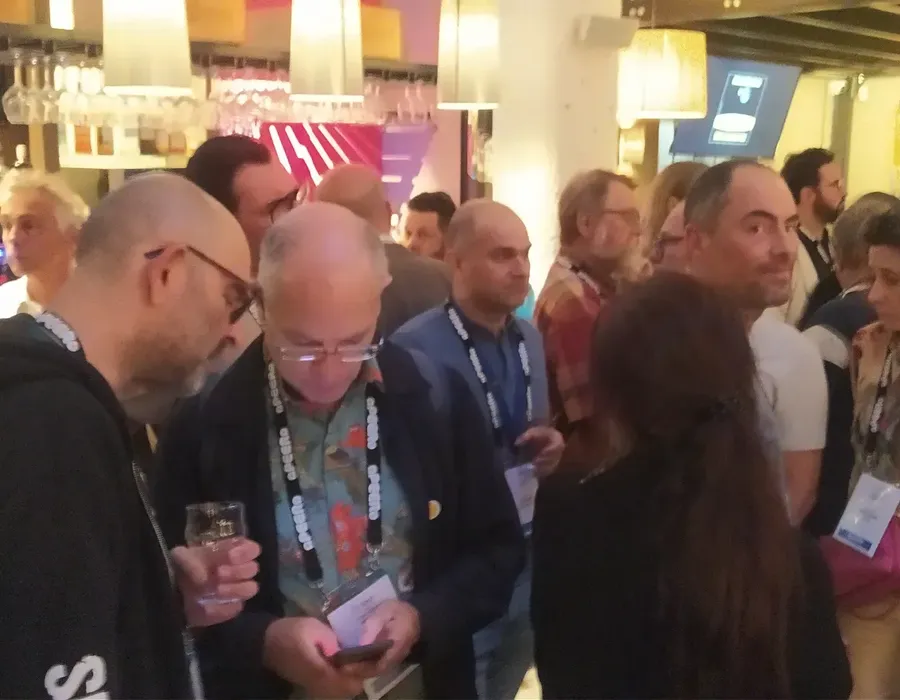
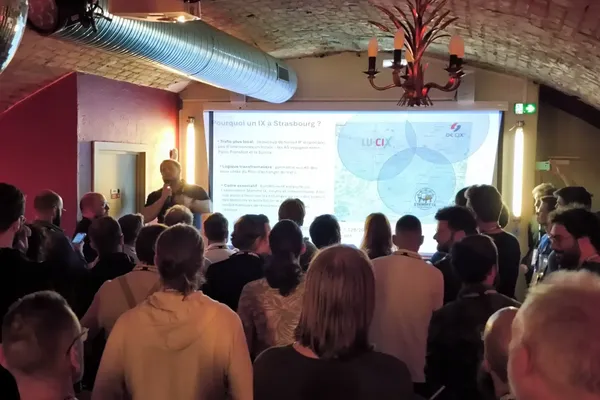
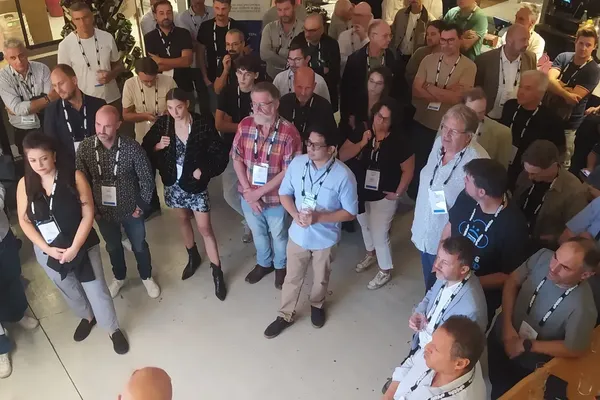
FRNIX does more than hold shares. The association brings together France’s interconnection community, France-IX customers or not.
aPEERo meetups
Meetups held in the regions, to help interconnection players meet and connect directly.
BGP workshops
For teams starting out or levelling up.
Working groups
Three groups for members only (IXPs & regions, technical operations, governance & strategy), producing notes and recommendations together, in a neutral setting with no sales pitching. Learn more
PEERmanences
A monthly video call for members and future members: questions about the association, admin matters, new projects.
IXPlorations
A free monthly video presentation of the benefits of connecting to an exchange point, open to any organisation.
First steps in BGP
Help getting started in the wonderful world of BGP.
IXP map
A map of exchange points in France, which Arcep cites as a source in its 2026 barometer.
Join FRNIX
Joining FRNIX means taking part in the governance of France-IX. Every member:
-
votes at the general assembly if it is an active member (an organisation), with one vote, whatever its size;
-
can put forward a candidate for the board;
-
takes part in the association’s working groups and events.
Membership is open to France-IX customers and to other interconnection players alike. Membership terms and fees on frnix.org.
The more numerous and diverse the members, the more FRNIX’s decisions reflect the whole ecosystem. More than 120 organisations and individuals are listed in the FRNIX directory today. One vote per active member: it only counts if you use it.
Governance: your questions
Do I need to join FRNIX to connect to France-IX?
The two are separate. You buy services from France-IX Services; you join FRNIX to take part in governance. Any organisation, private or public, French or foreign, can join, whether or not it is connected to France-IX.
Can France-IX be bought?
A sale would need the approval of the FRNIX board, elected by the active members, and then of two thirds of the France-IX Services strategy committee. Neither would have a reason to vote for it:
- Nobody would pocket the price. The French law of 1901 defines an association as pursuing an aim other than sharing profits: the proceeds of a sale could not be paid out to any member.
- The voters are also the users. The board answers to members who work in interconnection. For them, selling would mean handing their exchange to a buyer that could well be a competitor.
- No member can force it through. To elect the board, each active member has one vote, whatever its size: a dominant player weighs as much as the smallest network.
- The association would lose its purpose. FRNIX stands as guarantor of France-IX’s neutrality and stability; selling France-IX would empty that role of meaning.
What is the difference between France-IX and FRNIX?
France-IX Services is the company that runs the exchange. FRNIX is the association that owns it. It was formed in 2021 by the merger of France IX Association, founded in Paris in 2010, and Rezopole (LyonIX), founded in Lyon in 2001. Until 2025 the association was also called France-IX; it is now FRNIX, to put its community first.
Who runs France-IX?
Franck Simon leads France-IX Services. Its strategy committee, the CoStra, chaired by Gabriel Chenevoy, oversees its management and approves its major decisions; FRNIX appoints its members, four representatives of the association and three independent directors. FRNIX is chaired by Philippe Duby, and its board is elected by its active members.
Why a company, if the shareholder is an association?
To run the platform properly: hire, invest, sign contracts with data centres and customers. DE-CIX and AMS-IX follow the same pattern: an association as sole shareholder of an operating company.